
GET MORE FROM YOUR MATTRESS
(AND YOUR MONEY)
Sign up for Email Updates!
- Discounts
- Tips
- Latest News
- New Products
Get More From Your Mattress (and your money)



GET MORE FROM YOUR MATTRESS
(AND YOUR MONEY)
Enjoy up to 35% off mattresses + free adjustable + free pillow with mattress bundles (up to $2,919 in savings!). Queen mattresses starting at $399.
Copyright © 2026. Texas Mattress Makers.
Last Updated on: June 10, 2026 · 8 min read
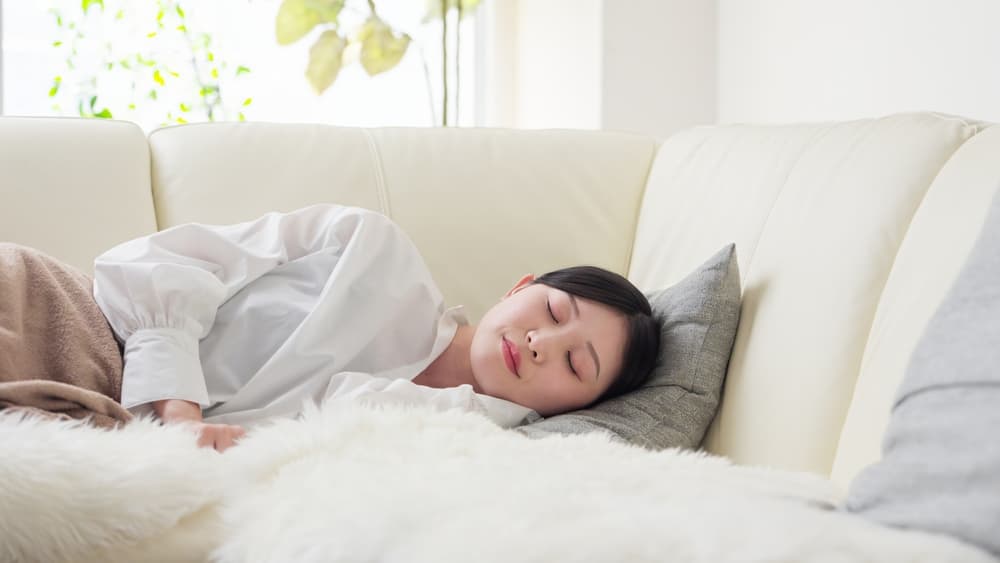
Is napping good for you, or is it a sign that something’s wrong with your sleep? The answer isn’t as simple as yes or no. Napping for 20 to 30 minutes can boost alertness, improve mood, and even support brain health. But excessive napping or needing a nap every day could signal deeper sleep issues that need to be addressed.
At Texas Mattress Makers, our Mattress Experts™ have spent over 45 years helping Houstonians sleep better. We understand that quality nighttime sleep is the foundation of health, and when you’re consistently exhausted during the day, something needs to change. Let’s explore when naps help, when they hurt, and what your daytime drowsiness might be telling you about your sleep quality.

Best Mattresses in Houston
| Yes, strategic napping can improve alertness, memory, and mood when done correctly. However, frequent or prolonged naps may indicate poor nighttime sleep quality that needs to be addressed. |
You’re yawning through your afternoon meeting. Your energy is crashing around 3 p.m. You’re thinking about how good it would feel to just close your eyes for 20 minutes. This is a common feeling adults deal with.
According to the American Medical Association (AMA), about one-third of adults in the U.S. take a daily nap, and research shows that many people benefit from it. A short nap can help you feel refreshed, improve your ability to learn and retain information, and give you the energy to tackle the rest of your day.
But here’s the question: are naps healthy because you’re using them strategically to boost performance, or is your body telling you you’re not getting adequate sleep at night? Dr. James Rowley, a sleep medicine physician at Chicago’s Rush University System for Health, told the AMA:
“Napping is actually indicative that you potentially are not getting enough sleep or not getting quality sleep. The need to nap in and of itself is not bad, but it can indicate that there could be something wrong.”
Dr. James Rowley
If these signs you’re not getting enough deep sleep ring true for you, you might be dealing with a sleep disorder or sleeping on a bad mattress. Either way, it’s important to treat the root cause, not just the symptoms.
When done right, napping can have some brain health benefits, including:
Research from Johns Hopkins Medicine found that people who napped for 30 to 90 minutes had better cognitive performance than those who didn’t nap or who napped longer than 90 minutes. Which brings us to our next question: how long should a nap be?
| The optimal nap length is 20 to 30 minutes for most adults. This provides all of the napping benefits without causing grogginess or interfering with nighttime sleep. |
The National Sleep Foundation confirms that researchers say a 20-minute nap (also known as a power nap) is the best length, allowing your mind and body to rest without entering the deeper stages of sleep. They have been proven to boost alertness and performance and are your best chance to feel refreshed immediately after waking up from your snooze.
But if you’re consistently needing power naps just to function through your day, that’s a red flag. Your body is telling you that your nighttime sleep isn’t doing its job.
| Sleep researchers have found that napping between noon and 2 p.m. is the optimal time for a nap because it won’t interfere with your body’s natural production of melatonin at night. |
Most adults tend to feel groggiest around lunchtime, after their morning caffeine has worn off. If you’re going to lie down for a 20-minute nap, be sure to consider the time of day. If you nap before noon, that is definitely a sign that you did not get a good night’s sleep. But if you nap after 2 p.m., you risk not being tired when it’s time to go to bed.
| You might feel the need to nap every day if you are sleep-deprived, sleeping on a bad mattress, or have a sleep disorder. |
As we mentioned earlier, wanting to take a nap every day isn’t necessarily a bad thing. However, needing naps every day as a younger or middle-aged adult may indicate you’re not getting enough quality sleep at night, have an underlying sleep disorder, or your mattress isn’t supporting restorative rest.
Here are some common reasons you feel the need to nap every single day:
If you’re not getting enough rest, ramifications can be severe, and your body will demand that you sleep during the day. The long-term effects of sleep deprivation include:
Your body needs sleep, and it’s trying to get it however it can.
Daily napping can be normal and beneficial for older adults (65+), but for younger adults, napping every day is a sign that your sleep quality is off. Either you have an underlying condition that prevents you from getting deep, restful sleep for the recommended 7 to 9 hours, or your mattress is compromising your sleep quality. Either way, something has to change.
| See a doctor if you need daily naps despite getting 7 to 9 hours in bed, experience excessive daytime sleepiness, or your naps regularly exceed 90 minutes. |
Here are some warning signs that your sleep problems need medical attention:
If you receive proper medical treatment and still need that midday snooze, the problem may be your mattress. Worn-out, sagging, old, or just generally uncomfortable mattresses are a very common (way too common) reason that Americans aren’t getting quality rest.
Let’s review: Is napping good for you? Yes, there are some napping benefits that can come from a 20-minute rest around 12–2 p.m. If you find yourself needing naps every day, the solution isn’t just to nap smarter, but to fix what’s broken with your sleep quality. And that all starts with your mattress.
Your mattress is the foundation of quality sleep. If you’re sleeping on a worn-out mattress that’s creating pressure points, trapping heat, or failing to support your spine properly, no amount of strategic napping will make up for poor nighttime rest.
At Texas Mattress Makers, we’ve been handcrafting mattresses in Houston for over 45 years. Our Mattress Experts™ understand that when people need daily naps, it’s often because their mattress isn’t doing its job. We’ll ask about your sleep position, any pain you’re experiencing, how old your current mattress is, and what your typical night looks like.
Then we’ll guide you to a mattress built with quality materials designed to last for decades (way longer than the industry standard). Why is this important? Because a mattress that actually supports your body can give you deep, restorative sleep that eliminates the need for daily naps.
Have more questions about sleep? Visit any of our Houston mattress stores today, and our team will help you understand whether your daytime fatigue is a napping strategy issue or a sleep quality problem. And if it’s the latter, we’ll help you fix it.
More Helpful Articles by Texas Mattress Makers:

Reviewed By:
Youval Meicler
Founder and President
Texas Mattress Makers's informational articles are reviewed by Youval Meicler, Founder and President of Texas Mattress Makers, who brings over 45 years of mattress expertise to ensure every piece reflects current industry standards and real-world knowledge.