
GET MORE FROM YOUR MATTRESS
(AND YOUR MONEY)
Sign up for Email Updates!
- Discounts
- Tips
- Latest News
- New Products
Get More From Your Mattress (and your money)



GET MORE FROM YOUR MATTRESS
(AND YOUR MONEY)
Enjoy up to 30% off cooling mattresses with free delivery on select mattresses (up to $1,946.99 in savings!). Queen mattresses starting at $599. Details.
Copyright © 2026. Texas Mattress Makers.
Last Updated on: April 11, 2026 · 7 min read

You’ve probably experienced it — that foggy, sluggish feeling after a night of tossing and turning. Maybe you thought you could push through on five hours of sleep, or maybe life just got in the way of a full night’s rest. Either way, your body and brain feel the effects immediately.
But what happens when you don’t get enough sleep? The effects go far beyond just feeling tired. Sleep deprivation affects everything from your cognitive function and emotional regulation to your immune system and long-term health. The bigger issue is that many people don’t realize how much their lack of sleep is impacting their daily performance and overall well-being..
And we’re here to help change that.
Youval Meicler, founder of Texas Mattress Makers and a Mattress Expert™ with over 45 years of experience, explains what happens to your body and brain when you don’t get enough sleep and what you can do about it.
When you don’t get quality sleep, your body enters a state called sleep deprivation — and the effects start immediately. Within just one night of poor sleep, you’ll notice decreased focus, slower reaction times, increased irritability, and difficulty retaining information. Your brain struggles to form new memories and process emotions effectively.
But the impacts don’t stop at how you feel. Sleep deprivation triggers a cascade of physiological changes:
Even one night of poor sleep can affect your metabolism, appetite, and decision-making.
How to tell if you are getting enough sleep isn’t always obvious. Many people have normalized feeling tired and don’t realize they’re chronically sleep-deprived. If you’re relying on caffeine to function, hitting snooze multiple times, or feeling drowsy during the day, your body is telling you something important: you’re not sleeping enough, and the quality of your sleep is poor.
Your brain needs sleep to function properly — it’s not optional. During sleep, your brain clears out metabolic waste, consolidates memories, processes emotions, and prepares for the next day. When you don’t sleep enough, these critical processes get interrupted.
The prefrontal cortex — the part of your brain responsible for decision-making, problem-solving, and emotional control — is particularly vulnerable to sleep loss. This is why you might snap at a coworker, make poor judgment calls, or struggle with tasks that would normally be easy when you’re running on limited sleep.
The minimum amount of sleep needed for brain function varies by age, but adults generally need 7–9 hours for optimal cognitive performance. Anything less and your brain starts operating at a deficit.
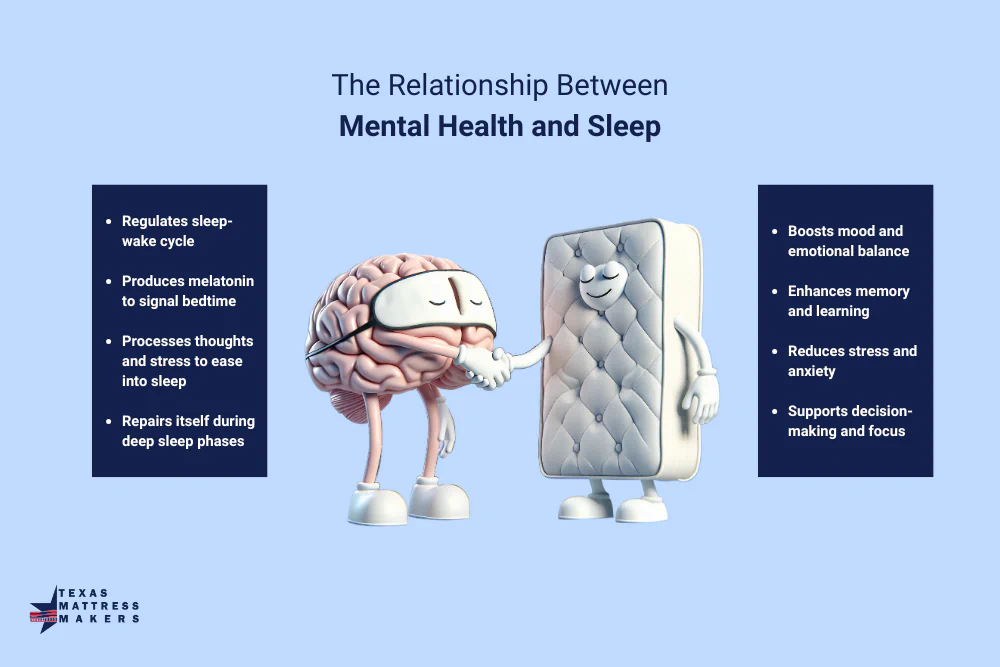
The connection between sleep and mental health is reciprocal, meaning one affects the other. Poor sleep can worsen anxiety and depression, while mental health conditions can make it harder to sleep if insomnia is a side effect. Looking long-term, according to the American Chemical Society (ACS), sleep loss over long periods can even increase risk for Alzheimer’s and other neurological diseases.
So, what can you do about it? Breaking this cycle starts with prioritizing consistent, quality rest.

Get Quality Sleep Each Night
Sleep deprivation doesn’t just make you tired. In fact, it affects nearly every system in your body.
Here are the most common side effects of sleep deprivation:
| Cognitive effects | Physical effects | Emotional effects |
| 1. Memory problems and difficulty learning new information 2. Reduced concentration and attention span 3. Impaired problem-solving and decision-making 4. Slowed reaction times | 1. Weakened immune system (more frequent illness) 2. Increased appetite and weight gain 3. Higher risk of accidents and injuries 4. Elevated blood pressure and heart strain | 1. Increased irritability and mood swings 2. Heightened stress and anxiety 3. Reduced emotional resilience 4. Greater susceptibility to depression |
These aren’t just minor inconveniences; these effects can snowball into health conditions that alter your quality of life. Long-term effects of sleep deprivation include increased risk of chronic conditions like diabetes, heart disease, obesity, and cognitive decline. There’s no way to “catch up” on lost sleep during the weekend.
Your body needs consistent, quality sleep to maintain your health long-term.
No. Five hours of sleep is not enough for adults, despite what some productivity gurus might claim. While individual sleep needs vary slightly, the vast majority of adults require 7–9 hours of sleep per night for optimal health and functioning.
Consistently sleeping only 5 hours per night is considered chronic partial sleep deprivation. Your body adapts to feeling exhausted, so you might not feel as tired as you actually are — but the cognitive and physical impairments are still there. You may think you’re functioning fine, but your reaction time, attention, memory, and judgment are all compromised. And if you continue down this path, your physical and mental health are at risk.
Not getting enough sleep is a dangerous risk that you don’t need to take. Your health and well-being are worth more than a few extra hours of hustling or partying.
If you’re dealing with daytime drowsiness right now, here are some immediate strategies that can help you be more alert until you can get proper rest:
Ways to stay alert:
However, these are temporary fixes, not solutions. The only real cure for sleep deprivation is quality sleep. No amount of coffee, energy drinks, or willpower can replace what your body and brain need.
How to get better sleep starts with creating consistent habits: a regular sleep schedule, a comfortable mattress that supports your body properly, a cool and dark bedroom environment, and a wind-down routine that signals to your brain it’s time to rest.
Notice how we keep saying that you need quality sleep to reap the benefits of nightly rest. Because here’s the truth: even if you are going to bed and waking up at reasonable hours, if you’re tossing and turning, snoring, or waking up constantly throughout the night, your brain and body are still not getting the rest they need.
Your mattress plays a bigger role in sleep quality than most people realize. An uncomfortable or worn-out mattress can prevent you from reaching the deep, restorative sleep stages your body needs, even if you’re in bed for eight hours. If you’re consistently waking up tired, dealing with aches and pains, or tossing and turning throughout the night, your mattress might be part of the problem.
Think of your mattress as the foundation of your sleep quality. If you find a mattress that suits your body and your needs, you will get amazing sleep each night. Trust us, we’re the Mattress Experts™.
Sleep isn’t a luxury or something you can sacrifice to be more productive. It’s a biological necessity that affects every aspect of your health, safety, and performance. Really understanding what happens when you don’t get enough sleep is the first step toward making it a priority. The consequences of sleep deprivation are too scary to ignore.
At Texas Mattress Makers, we’ve been helping Houstonians get better sleep for over 45 years. Every mattress is handcrafted in our Downtown Houston factory using quality materials designed to last 20–30 years — not the industry standard 5–7 years.
Visit any of our mattress stores in Houston today and let our Mattress Experts™ find your perfect sleep setup. Our team is trained in manufacturing first, so we can explain exactly what goes into each mattress and help you find the right fit for how you sleep. No pressure, no commission sales. We prioritize honest expertise focused on helping you sleep better and feel better.
More Helpful Articles by Texas Mattress Makers:

Reviewed By:
Youval Meicler
Founder and President
Texas Mattress Makers's informational articles are reviewed by Youval Meicler, Founder and President of Texas Mattress Makers, who brings over 45 years of mattress expertise to ensure every piece reflects current industry standards and real-world knowledge.