
GET MORE FROM YOUR MATTRESS
(AND YOUR MONEY)
Sign up for Email Updates!
- Discounts
- Tips
- Latest News
- New Products
Get More From Your Mattress (and your money)



GET MORE FROM YOUR MATTRESS
(AND YOUR MONEY)
Summer may be over, but the Houston heat is still lingering. Save up to 30% on cooling mattresses with free delivery on select mattresses (up to $1,946.99 in savings!). Queen mattresses starting at $599. Details.
Copyright © 2026. Texas Mattress Makers.
Last Updated on: August 4, 2026 · 9 min read
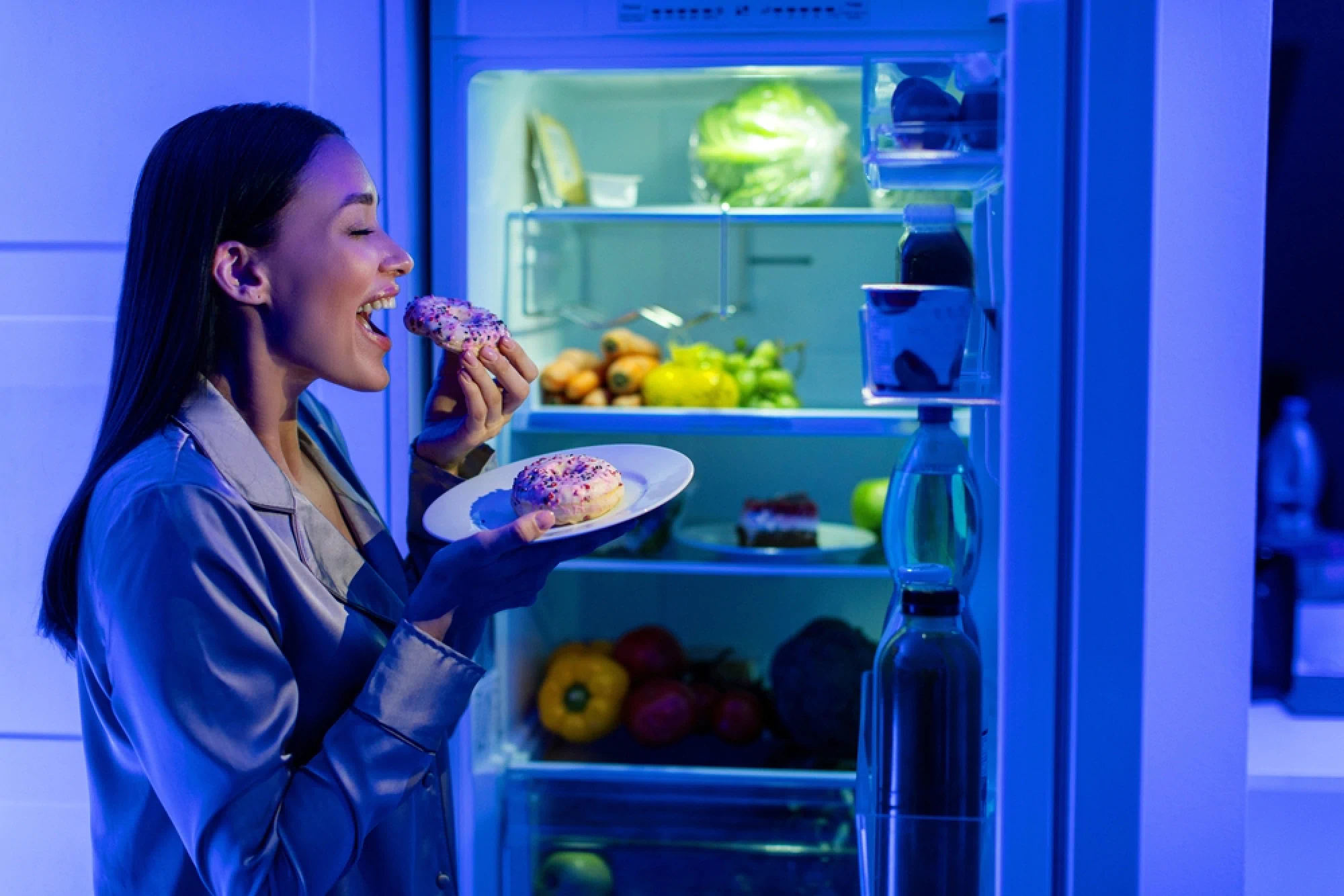
| Eating before bed spikes blood glucose levels, triggering stress hormones and nervous system activation that keep you awake and reduce sleep quality. Research shows high sugar intake is linked to lighter sleep, more nighttime awakenings, and less restorative deep sleep. Avoiding sugar for at least two to three hours before bed significantly improves sleep quality for most people. |
If you’re struggling to fall asleep or stay asleep through the night, you might be looking in the wrong places for answers. You’ve probably considered your mattress, your bedroom temperature, or your stress levels. But have you thought about what you’re eating before bed?
The truth is, sugar before bed could be sabotaging your sleep more than you realize. That evening dessert, late-night snack, or sugary drink might feel innocent, but it’s doing significant damage to your sleep quality.
In our 45+ years in the industry, we’ve learned that good sleep depends on more than just a quality mattress (even though a quality mattress is essential to better sleep). Healthy habits, including what you eat before bed, matter tremendously. If you want to get better rest each night, understanding the relationship between sugar and sleep can be a bittersweet lesson.
Here at Texas Mattress Makers, we’re not medical professionals. If you have any concerns about how your diet affects your sleep and quality of life, talk with your doctor.

Your Best Night’s Sleep (Every Night)
Here’s the science: When you consume sugar before bed, your body experiences a rapid spike in its blood sugar levels. Your pancreas responds by releasing insulin to process that sugar, causing your blood glucose to drop. This spike-and-crash cycle creates several problems for your body’s circadian rhythm (the processes that tell your body when you’re tired).
Research published in the American Journal of Lifestyle Medicine examined the relationship between sugar consumption and sleep quality. The study found that high sugar intake is associated with lighter sleep, more nighttime awakenings, and reduced restorative deep sleep. In other words, eating sugar before bed doesn’t just keep you awake; it reduces the quality of the sleep you do get.
Beyond the blood sugar effects, sugar triggers the release of several hormones and neurotransmitters that work against sleep:
The combined effect results in your body being physiologically prepared for activity and alertness when you need it to be preparing for sleep.
Absolutely. It’s pretty straightforward: blood sugar spikes, stress hormones activate, and your nervous system shifts into alert mode just when you’re trying to fall asleep.
For many people, eating sugary foods in the evening creates an energy boost that persists for hours. You might notice you feel more alert, restless, or energized after eating something sweet before bed. That’s your body’s predictable response to sugar consumption.
The timing matters too. If you eat sugar 2-3 hours before bed, you might experience a blood sugar crash that actually makes you feel tired initially. But this artificial tiredness from a sugar crash is different from natural sleepiness.
Your body is crashing from the spike, not actually rested. When you finally do fall asleep, the quality suffers because your body is dealing with metabolic stress rather than moving through healthy sleep cycles. Your body can’t function on not enough sleep — that’s what makes this dangerous.
Research suggests yes, it does. High sugar consumption is linked to multiple sleep disturbances. Studies show that people who consume high amounts of sugar experience:
Sugar and sleep have a cause-and-effect relationship. The more sugar you consume before bed, the worse your sleep tends to be. On the other end of the spectrum, reducing sugar intake, especially in the hours before sleep, correlates with better sleep quality and more restorative rest.
Yes. There is documented research showing the connection between sugar consumption and anxiety. Here’s how: Sugar triggers adrenaline release and cortisol elevation, both of which increase anxiety. When you’re trying to fall asleep and your body is flooded with these stress hormones, it’s normal to feel anxious. You might find yourself lying awake with racing thoughts, physical restlessness, or a sense of unease that you can’t quite explain.
Additionally, the blood sugar crash that follows the initial spike can intensify anxiety symptoms. When your blood sugar drops, your body perceives it as a threat, triggering the release of additional stress hormones. This can create a cycle of anxiety that keeps you awake and disrupts sleep quality.
If you struggle with sleep and mental health, reducing sugar intake, especially before bed, can have a significant impact on both your anxiety levels and your sleep.
Yes, reducing your sugar intake during the day (especially before bed) keeps your blood sugar levels and your stress hormones stable. Some of the benefits of cutting sugar before bed include:
These improvements happen because you’re removing a physiological stressor that was working against your sleep. Without sugar’s stimulating effects, your body can focus on the natural processes that prepare you for and maintain quality sleep.
The transition period can be challenging if you’re accustomed to evening sugar. You might experience cravings or feel like you’re missing your usual routine. The good news is, according to studies listed above, most people find that their sleep quality improves after two to three weeks.
Most experts recommend avoiding sugar for at least 2-3 hours before bedtime. Here’s why: it takes time for your body to process sugar and stabilize blood glucose.
Two to three hours gives your body enough time to:
Some people are more sensitive to sugar’s effects than others. If you’re particularly sensitive to caffeine (which also disrupts sleep), you’re likely sensitive to sugar’s stimulating effects too. In that case, you might need to extend this window to four or even five hours before bed.
The safest approach is to avoid sugar entirely in the evening. If you need a snack before bed, choose options with protein and healthy fats that won’t trigger blood sugar spikes or nervous system activation.
What foods don’t spike your blood sugar before bed? Apples and peanut butter, nuts, avocado toast, or yogurt and berries are good options for a late-night snack. They may not seem as tasty as your standard milk and cookies, but they won’t keep you up at night.
For more information on what to avoid before bedtime, check out our articles:
If you’re currently eating sugar before bed, here’s how to transition to healthier habits:
Beyond avoiding sugar, consider other sleep-supporting habits:
When it comes to getting better sleep, your mattress, bedroom temperature, and sleep schedule all matter. But so does what you’re putting into your body before bed. Having sugar before bed is one of the most overlooked sleep disruptors. You eat dessert, feel fine, go to bed, and then wonder why you can’t sleep or why your sleep feels restless.
Now, to be clear, cutting out evening sugar won’t solve every sleep problem, but for many people, it’s a game-changer. Combined with a quality mattress, a dark and cool bedroom, and consistent sleep habits, eliminating sugar before bed creates the foundation for truly restorative sleep.
If you’ve made changes to your diet and sleep habits but still aren’t sleeping well, your mattress might be the missing piece. Visit any Texas Mattress Makers showroom to find a mattress that supports your body and allows you to experience the deep, restorative sleep you deserve.
Trust us, finding the right mattress for your needs is sweeter than any chocolate or dessert.
More Helpful Articles by Texas Mattress Makers:

Reviewed By:
Youval Meicler
Founder and President
Texas Mattress Makers's informational articles are reviewed by Youval Meicler, Founder and President of Texas Mattress Makers, who brings over 45 years of mattress expertise to ensure every piece reflects current industry standards and real-world knowledge.