
GET MORE FROM YOUR MATTRESS
(AND YOUR MONEY)
Sign up for Email Updates!
- Discounts
- Tips
- Latest News
- New Products
Get More From Your Mattress (and your money)



GET MORE FROM YOUR MATTRESS
(AND YOUR MONEY)
Summer may be over, but the Houston heat is still lingering. Save up to 30% on cooling mattresses with free delivery on select mattresses (up to $1,946.99 in savings!). Queen mattresses starting at $599. Details.
Copyright © 2026. Texas Mattress Makers.
Last Updated on: September 9, 2026 · 13 min read
How do you clean a mattress? Start with vacuuming to remove dust and debris, then address stains with appropriate solutions based on stain type (urine, sweat, blood, or beverages) and your mattress type. Most stains respond well to a combination of hydrogen peroxide, baking soda, and enzymatic cleaners. Allow the mattress to air dry completely before replacing sheets. For best results, use a quality waterproof mattress protector to prevent future stains and reduce your need to clean. If you're looking for the best waterproof mattress protector, we have a guide to help.
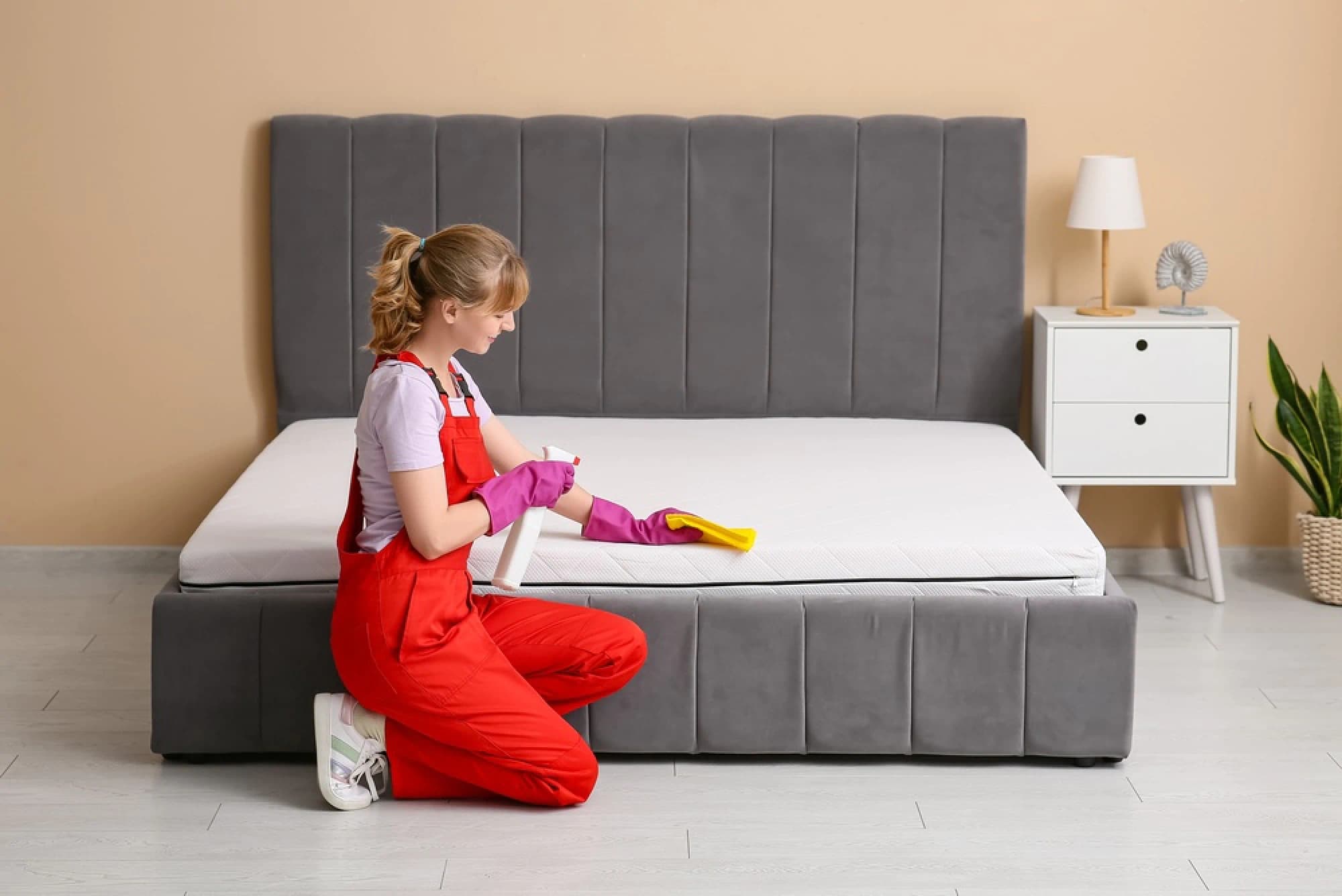
If mattresses are one of the largest investments we’ll make in our lifetime, why do we treat cleaning and maintaining them as an afterthought? We spend a third of our lives on our mattresses, which means over time, they accumulate sweat, dust, allergens, and stains that break down materials and reduce lifespan. It’s not only gross, but it’s also a poor way to treat something we spent our hard-earned money on.
At Texas Mattress Makers, we handcraft mattresses that are meant to last a lifetime, but without proper care, they can deteriorate prematurely (which hurts your sleep quality). Here’s the good news: learning how to clean a mattress properly isn’t complicated. With the right techniques and products, you can remove stains, eliminate odors, and extend your mattress’s life significantly.
This guide for how to clean a mattress walks you through the best way to clean a mattress, provides stain-specific cleaning solutions, and explains what NOT to do when cleaning your mattress.

Get All-Around Protection
A dirty mattress that is not cleaned in a timely manner is a damaged mattress. A damaged mattress deteriorates faster, can’t support your body properly, and makes your sleep quality worse.
Think about it: your mattress is constantly collecting dead skin cells, sweat, dust mites, and more every night you sleep on it. Over time, this accumulation breaks down foam layers, reduces support, and creates an increasingly unhygienic sleeping surface. Stains make this problem even worse. When spills or accidents penetrate your mattress, they can create permanent damage if not addressed quickly, which can also lead to bacteria and mold developing in damp areas. Protein-based stains (sweat, blood, urine) attract dust mites and create odors that won’t go away.
It’s important to note that most mattress warranties will not cover mattress defects caused by liquid, so taking good care of your mattress and protecting it will allow you to keep your mattress for much longer.
This is why knowing how to clean a mattress properly is critical. Regular cleaning combined with a quality mattress protector will dramatically extend your mattress’s lifespan, keeping you sleeping on a fresh, hygienic surface for decades.
When learning how to clean a dirty mattress, you first need to discover the best ways to clean your mattress. Just as all mattresses are not one-size-fits-all, not all cleaning solutions will work for every mattress.
For example, if you have a memory foam mattress, try to use as little moisture as possible when lifting a stain. Instead, simply spot treat any stains to keep it clean. If you have any questions about cleaning your particular mattress, feel free to speak with any of our Mattress Experts™ for tips.
Before addressing specific messes and stains, start with these fundamental cleaning steps:
Knowing how to clean a mattress is one thing, but knowing how to clean a mattress stain efficiently is very important for preventing damage. However, not every stain responds the same to treatments. If you’re wondering “What is the best thing to clean a mattress with?” It depends on the type of stain and what caused it.
Here are the most common stain types and the best methods to remove them.
Urine stains are among the most common mattress problems, particularly in households with young children who experience bedwetting or pets who may have accidents. Rule of thumb: the longer urine sits, the more it sets into the mattress and the harder it becomes to remove completely.
Fresh urine stains
Set-in urine stains
For stains that have been there a while,
This combination addresses both the stain and embedded odor. However, prevention is key: if you’re dealing with bedwetting or frequent accidents, using the best waterproof mattress protector can prevent these situations from damaging your mattress entirely.
If you sleep hot, are going through menopause, or train intensively* and are more likely to experience night sweats, you want to be sure your sweat doesn’t stain your mattress. Much like on your white t-shirts, long-standing sweat creates yellowing stains and odors over time.
*Learn more about finding the best mattress for athletes
Fresh sweat stains
Yellow sweat stains (set-in)
How do you get yellow brown stains out of a mattress? For the yellow-brown stains that develop from long-term sweat accumulation…
The combination of ingredients breaks down the set-in stain and eliminates discoloration.
Blood stains require quick action because they set quickly as they dry. The key to getting blood out of your mattress is using cold water, not hot, since heat sets protein-based stains.
Fresh blood stains
Dried blood stains
Whether you like having your morning coffee in bed or your toddler brings a juice box to bed with them, accidents can happen. Coffee, wine, juice, and other beverages create discoloration and can leave behind a sticky residue if not addressed quickly.
Fresh beverage stains
Set-in beverage stains
If the stain has dried…
Again, hydrogen peroxide can work for stubborn stains, but it’s wise to test it first to ensure it doesn’t bleach your mattress fabric.
Now that we’ve gone over the do’s, here are the don’ts. Your mattress’s materials are more delicate than you might think. As experts who have seen countless mattress damage situations, we know which cleaning mistakes cause more harm than the original stain.
Here’s what to avoid when cleaning a mattress:
Is a mattress protector necessary? Yes. ABSOLUTELY. We can’t overstate the importance of a mattress protector. A quality waterproof protector catches spills, sweat, and accidents before they reach your mattress. This means:
If you haven’t yet invested in a mattress protector, now is the time. It costs a fraction of your mattress investment and saves you thousands in mattress replacement costs over time. Plus, learning how to wash a mattress protector is super simple as most are machine-washable. That’s right — take it off, throw it in the washer and dryer, and done.
Watch our Mattress Experts™ discuss why mattress protectors matter and how they can save you from extensive cleaning situations.
If you’re ready to protect your mattress, check out our mattress protector FAQs to learn more about your options.
Hydrogen peroxide, baking soda, white distilled vinegar, and dish soap are the safest and most effective mattress cleaning products. These natural ingredients address different stain types without damaging your mattress.
Bonus: Does vinegar smell go away after cleaning? Yes. The vinegar smell dissipates as your mattress dries. You can speed this up by opening windows and allowing air circulation. Sprinkling baking soda after cleaning also helps neutralize vinegar odor.
It’s a good idea to vacuum your current mattress every 1-2 months, and fully clean it at minimum twice a year to keep it fresh and prevent damage or infestations. If you use a mattress protector, you’ll need to clean less frequently.
Yes, particularly sweat and blood stains, because it breaks down protein compounds. However, always test hydrogen peroxide on an inconspicuous area first to ensure it doesn’t bleach your mattress fabric.
It’s not recommended. Steam cleaners introduce excessive moisture that your mattress can’t dry quickly, leading to mold and mildew. Heat also traps protein-based stains like blood, urine, and sweat into the mattress. For best results, stick with dry and damp cleaning methods instead.
Yellow-brown stains are typically from sweat or urine. Use a paste of hydrogen peroxide, baking soda, and dish soap. Apply to the stain, let sit for 30 minutes, scrub gently, and blot thoroughly. These stains often require multiple applications.
If you have a dual-sided mattress that is designed to be flipped, you can; however, standard mattresses should not be flipped or rotated. Rotating or flipping a one-sided mattress can reduce the body impressions that support your spine and make sleep uncomfortable.
Honestly, professional mattress cleanings can cost an arm and a leg, which makes learning how to clean a mattress all the more important. However, cleaning the mattress is only half the battle. The other half is preventing damage from happening in the first place. A quality waterproof mattress protector combined with regular maintenance will keep your mattress fresh, clean, and performing at its best for decades.
Your mattress is an investment in your health and comfort, so protect it accordingly. Visit any of our mattress stores in Houston or shop online to explore our mattress protector options and learn how to care for your specific mattress. We’ll help you keep your mattress investment lasting as long as possible.
More Helpful Articles by Texas Mattress Makers:

Reviewed By:
Youval Meicler
Founder and President
Texas Mattress Makers's informational articles are reviewed by Youval Meicler, Founder and President of Texas Mattress Makers, who brings over 45 years of mattress expertise to ensure every piece reflects current industry standards and real-world knowledge.